Flavour masking is the work of making an off-note stop dominating a product that needs the ingredient causing it. It runs on three separate levers rather than one: blocking or suppressing the taste signal, removing the off-note at source before it ever reaches the formula, and rebuilding the aroma around what is left. The flavouring rules of Australia and New Zealand, Europe and Singapore, and the Codex texts, do not recognise a masking agent as a category, so on an Australian or New Zealand label the work declares under Standard 1.2.4, s 1.2.4—7(4) as "flavouring" or "flavour", or as a flavour enhancer if that is what it is.
Bitter Receptors, and Why One System Rarely Fixes a Formula
Bitterness is the most common brief, and the receptor biology explains why one system rarely fixes a whole formula. A 2010 screen in Chemical Senses reported that "Humans perceive thousands of compounds as bitter. In sharp contrast, only approximately 25 taste 2 receptors (TAS2R) bitter taste receptors have been identified", and that after challenging those receptors with 104 bitter chemicals, "3 hTAS2Rs together were able to detect approximately 50% of the substances used." The distribution is uneven in a way that matters commercially: "though 63 bitter substances activated only 1-3 receptors, 19 compounds stimulated up to 15 hTAS2Rs." The human count has since moved to 26. The 2024 BitterDB update records that "human TAS2R2, which until recently was considered a pseudogene, was added as a functional variant for which 8 ligands were recently found", and that its authors "recalculated the multiple sequence alignment (MSA) for all 26 human TAS2Rs." Mapping remains thin: "For ∼700 molecules, at least one associated bitter taste receptor (TAS2R) is reported."
A Mapped Bitterant Is a Narrower Target
Where a specific bitterant has been mapped, the brief becomes much more tractable. Steviol glycoside bitterness is the clearest case. A 2012 study in the Journal of Agricultural and Food Chemistry found that "A comprehensive screening of 25 human bitter taste receptors revealed that two receptors, hTAS2R4 and hTAS2R14, mediate the bitter off-taste of steviol glycosides." Two receptors is a narrow target. A bitter active with no published receptor assignment is a much wider one, and your brief should not assume a blocker exists for it.
Blocking Is Not the Same as Suppression
Blocking and suppression are different mechanisms and they behave differently in a formula. Blocking means an antagonist at the receptor. The best documented food-relevant example is GIV3727, reported in Current Biology in 2010 as "a novel bitter receptor antagonist (GIV3727) that inhibits activation of hTAS2R31 (formerly hTAS2R44) by saccharin and acesulfame K", with the same abstract noting "this compound could inhibit five additional hTAS2Rs" and that "In human sensory trials, GIV3727 significantly reduced the bitterness associated with the two sulfonamide sweeteners." The sensory result was reported for those two sweeteners. Blocking can also happen downstream of the receptor. A 1999 PNAS study found that "AMP and chemically related compounds inhibited in vitro responses to several bitter compounds (e.g., denatonium, quinine, strychnine, and atropine)", while the chemically similar GMP "inhibited neither". Suppression is different again and often simpler. A 2024 study of amino acid bitterness reported that "the essential amino acids comprise the most bitter stimuli, with six of them conveying the most bitterness" and that "bitterness can be largely suppressed by sodium salts for 5 of the 6 most bitter amino acids", which is why free-amino-acid and hydrolysate systems respond to salt where they resist an aromatic.
Alcohol Burn and Astringency Are Different Systems
Alcohol burn and astringency are not taste at all, so a bitter tool will not touch them. Ethanol works on the heat channel: a 2002 Nature Neuroscience study found that "Ethanol potentiated the response of VR1 to capsaicin, protons and heat and lowered the threshold for heat activation of VR1 from approximately 42 degrees C to approximately 34 degrees C", which puts the channel's threshold below body temperature. Astringency is a protein-binding phenomenon. A 2026 study in Food Chemistry reported that "the binding energies of the polyphenols with MUC were generally lower than those with bPRPs, following the order of binding affinity TA > PC > EGCG > C > GA", that is, tannic acid ahead of proanthocyanidin, EGCG, catechin and gallic acid, and that "Higher content of phenolic hydroxyl groups and degree of gallate acylation of polyphenols resulted in stronger interaction and more binding sites with the salivary proteins."
Plant Protein: the Off-Note You Can Remove Upstream
For plant protein, the strongest lever is often upstream of the flavour brief entirely. The beany and green character is lipid oxidation chemistry, and a 2026 study in Current Research in Food Science names hexanal as "the primary aldehyde formed from linoleic acid oxidation and a key driver of beany, grassy, and green off-flavors due to its low odor threshold". Adding catechins to the extraction medium changed the numbers substantially: "catechins at 500 ppm effectively reduced the content of 1-pentanol by 3.5 times, hexanal by 6 times, and hexanol by 1.3 times, compared to the control sample", with "the concentration of hexanal decreased from 6 to 1.2 μg g −1 DW, with catechins concentrations ranging from 250 to 2000 ppm". A commercial rosemary and ascorbate antioxidant blend did not match it in the same trial. Enzymatic hydrolysis is a second lever: a companion study found that of eight beany and grassy odour-active compounds, "five compounds responsible for the undesirable notes (hexanal, 2-ethyl-1-hexanol, 1,3-di-tert-butylbenzene, undecane, and 2-pentylfuran) showed a significant decrement in odor intensity." Both are process interventions rather than masking, which is exactly the point: the cheapest off-note to mask is the one that was never formed.
Fortification: Metallic Aroma and the KCl Threshold
Fortification off-notes behave differently again, and the mechanism decides the fix. Iron's metallic character is largely not a taste. A study of metal salts found that "Metallic sensations were decreased by nasal occlusion, which in the absence of any orthonasal metallic smell, implies that the sensations were retronasally perceived volatiles in the nose open condition", consistent with metal salts generating volatile lipid oxidation products in the mouth. An aroma-side approach can therefore work where a taste blocker cannot. Potassium chloride in a sodium reduction is a taste problem, and it has a measured threshold in at least one matrix. A 2022 study on bread used a two alternative forced choice design against a 2 per cent sodium chloride control and reported that "the proportion equivalent to difference threshold was obtained, defined as the KCl percentage to 75% of correct responses, which corresponded to 0.92% of KCl." That was measured on ninety regular bread consumers, with a linear regression fit of 0.8902. The difference threshold applies to bread.
Sweetener Bitterness, and Why More Stevia Backfires
Sweetener bitterness has one counterintuitive finding that saves a lot of bench time. A 2026 review records that major steviol glycosides "such as STV and Reb A, are commonly associated with pronounced bitterness, licorice-like aftertaste, and prolonged sweetness lingering", while "rebaudioside D (Reb D) and rebaudioside M (Reb M), generally show a faster onset of sweetness, lower bitterness, shorter aftertaste, and a more sucrose-like flavor profile". Lower, not absent, and the same two receptors carry the bitterness for all of them. The counterintuitive part is what happens when you push the dose. The 2012 receptor study observed that "For some test substances, e.g., stevioside, we observed a decline in sweet intensity at supra-maximum concentrations", attributing it not to sweet-receptor blocking but to "intramolecular cross-modal suppression between the sweet and bitter taste component of steviol glycosides". Adding more stevia to chase a sweetness target can move the product backwards.
What 2026 Added
Three findings from 2026 belong in that picture, each with its own limits. The first is a human result for receptor antagonism. A study in Scientific Reports reported that a rinse-and-spit solution containing sodium homoeriodictyol, "an approved flavoring compound and antagonist of bitter taste receptors (TAS2Rs), reduced the perceived bitterness of caffeine in patients receiving carboplatin ( n = 15)." The study was a preliminary trial in 15 patients. The second is umami. A 2026 review in Sensors records that "Representative umami compounds, including monosodium glutamate (MSG) and umami peptides, have been reported to suppress the bitterness of several bitter APIs, suggesting potential applicability beyond compound-specific taste-masking strategies", which points at receptor-level and central mechanisms rather than simple covering, though it is a narrative review of pharmaceutical work rather than a food trial. The third is a new authorisation in Europe. Commission Regulation (EU) 2026/175 of 26 January 2026 added hesperetin dihydrochalcone, FL No. 16.137, to the Union list at a maximum level of not more than 10 mg per kilogram in each of fourteen food categories, after the European Food Safety Authority "concluded that such use under the proposed conditions and levels of use does not raise a safety concern". Its close relative neohesperidin dihydrochalcone was given a temporary acceptable daily intake by JECFA in June 2026, "of 0-3.8 mg/kg bw per day for NHDC", against an estimated dietary exposure of 1.8 mg/kg bw per day. Neither is an Australian permission. A European authorisation has no effect under the Food Standards Code, where the route runs through the permitted flavouring substance definition instead.
No Regulator Has a Masking Category
None of this has a regulatory category called masking. The word does not appear in Codex CAC/GL 66-2008, in the European flavourings regulation, in the Food Standards Code instruments that govern flavourings and their declaration, or in the Singapore Food Regulations. What regulators recognise is two functions. Codex, at cl 2.2, states that "Flavourings are products that are added to food to impart, modify, or enhance the flavour of food (with the exception of flavour enhancers considered as food additives", and excludes anything with an exclusively sweet, sour or salty taste. The Food Standards Code, Schedule 14, describes a flavouring as "intense preparations which are added to foods to impart taste or odour, which are used in small amounts and are not intended to be consumed alone, but do not include herbs, spices and substances which have an exclusively sweet, sour or salt taste", and puts "flavour enhancer, flavour modifier, tenderiser" together under a purpose that "enhances the existing taste or odour of a food". Impart or modify on one side, enhance what is there on the other. A masking system has to be described as one of those, and the description has to match what it actually does.
How a Masking System Declares in Australia
On the pack the consequence is short. Standard 1.2.4, s 1.2.4—7(4) provides that "If a *flavouring substance is an ingredient, it must be listed in the statement of ingredients by using: (a) the word 'flavouring' or 'flavour'; or (b) a more specific name or description of the flavouring substance", and s 1.2.4—3(2)(a) that "A statement of ingredients need not list: (a) an ingredient of a *flavouring substance". Two carve-outs cut across that, and masking systems run into them often. Section 1.2.4—7(5) requires nine substances to be named when added as a flavouring substance or as an ingredient of one, including monosodium glutamate, the other glutamates, disodium guanylate, disodium inosinate and disodium-5′-ribonucleotides, and s 1.2.4—7(6) requires caffeine to be listed as caffeine however it arrives. A savoury or umami-leaning masking system frequently carries one of those, so check, rather than assume, that the whole system declares as flavour. Allergens reach inside a flavouring as well, under Standard 1.2.3, s 1.2.3—4(5).
Two Limits
Two limits belong in any masking brief. First, ask a supplier for the panel method behind any headline bitterness-reduction figure. The abstract of the human sensory result for the best documented blocker reads "significantly reduced" and gives no figure. Second, the ingredient sets the ceiling. A lower dose of a bitter active is easier to handle than a high one, and the process levers above show why dose and process belong in the conversation alongside the flavour. Codex also frames the outer boundary, requiring at cl 3.3 that flavouring use "does not mislead the consumer about the nature or quality of food" and at cl 3.4 that it be used "under conditions of good manufacturing practice, which includes limiting the quantity used in food to the lowest level necessary to accomplish the desired flavouring effect."
How to Brief a Flavour House
Working with a flavour house on a masking brief goes more smoothly when you bring a few things to the first conversation. Name the off-note as precisely as you can, bitter, metallic, astringent, sulphurous, earthy, or a lingering aftertaste, because the descriptor points to different mechanisms and different evidence. Name the ingredient and its dose, since a mapped bitterant is a far narrower target than an unmapped one. Share the actual base, because the flavourist needs to taste the real off-note in the real matrix. Describe the format and the processing, because heat, pH and shelf life change what holds. State the label constraints up front, including whether any component would trigger the s 1.2.4—7(5) or s 1.2.4—7(6) declarations in your market. Name the target markets, so the sweetness and aromatic direction can be tuned to local preference.
How VKA Approaches Masking
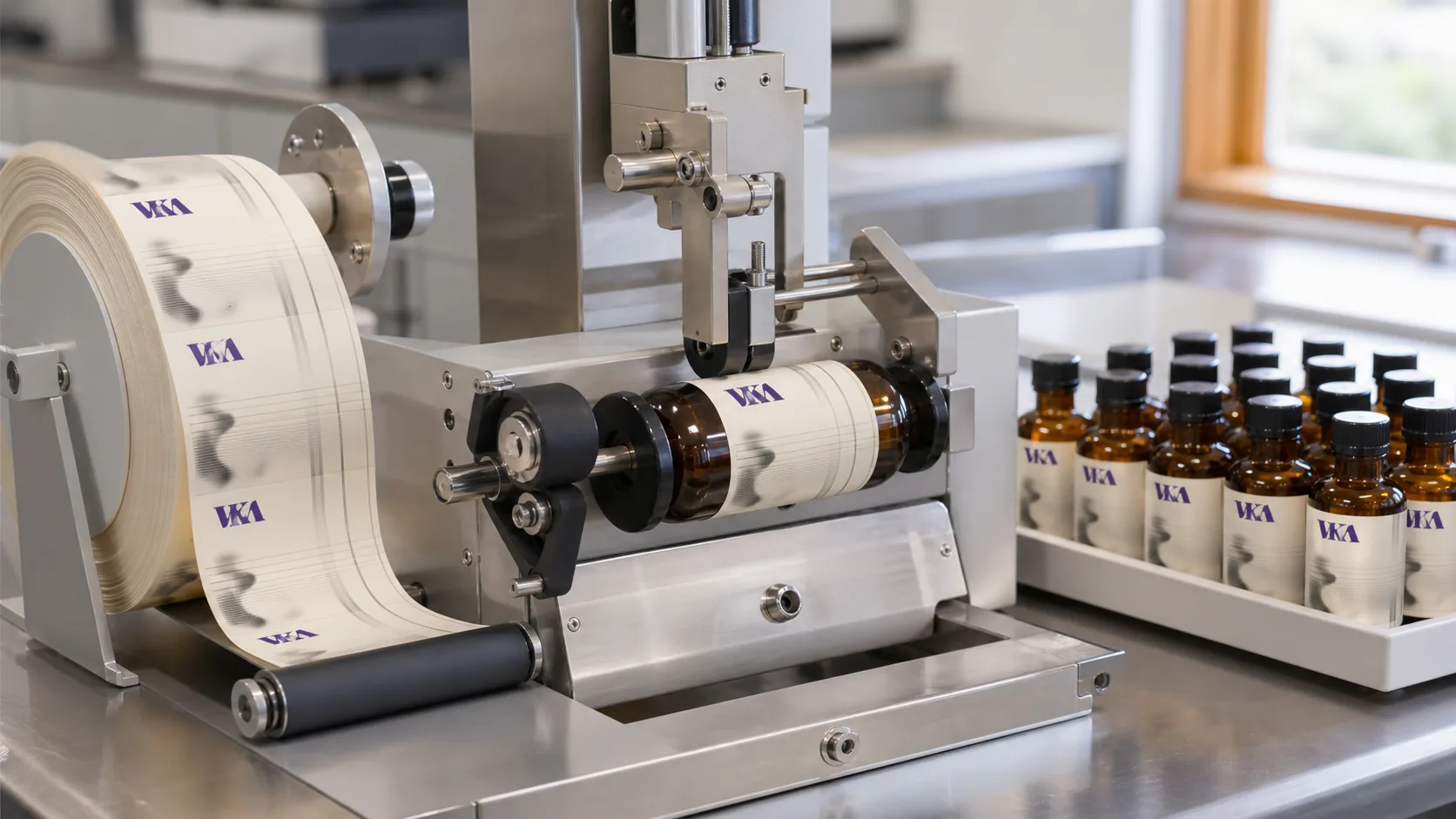
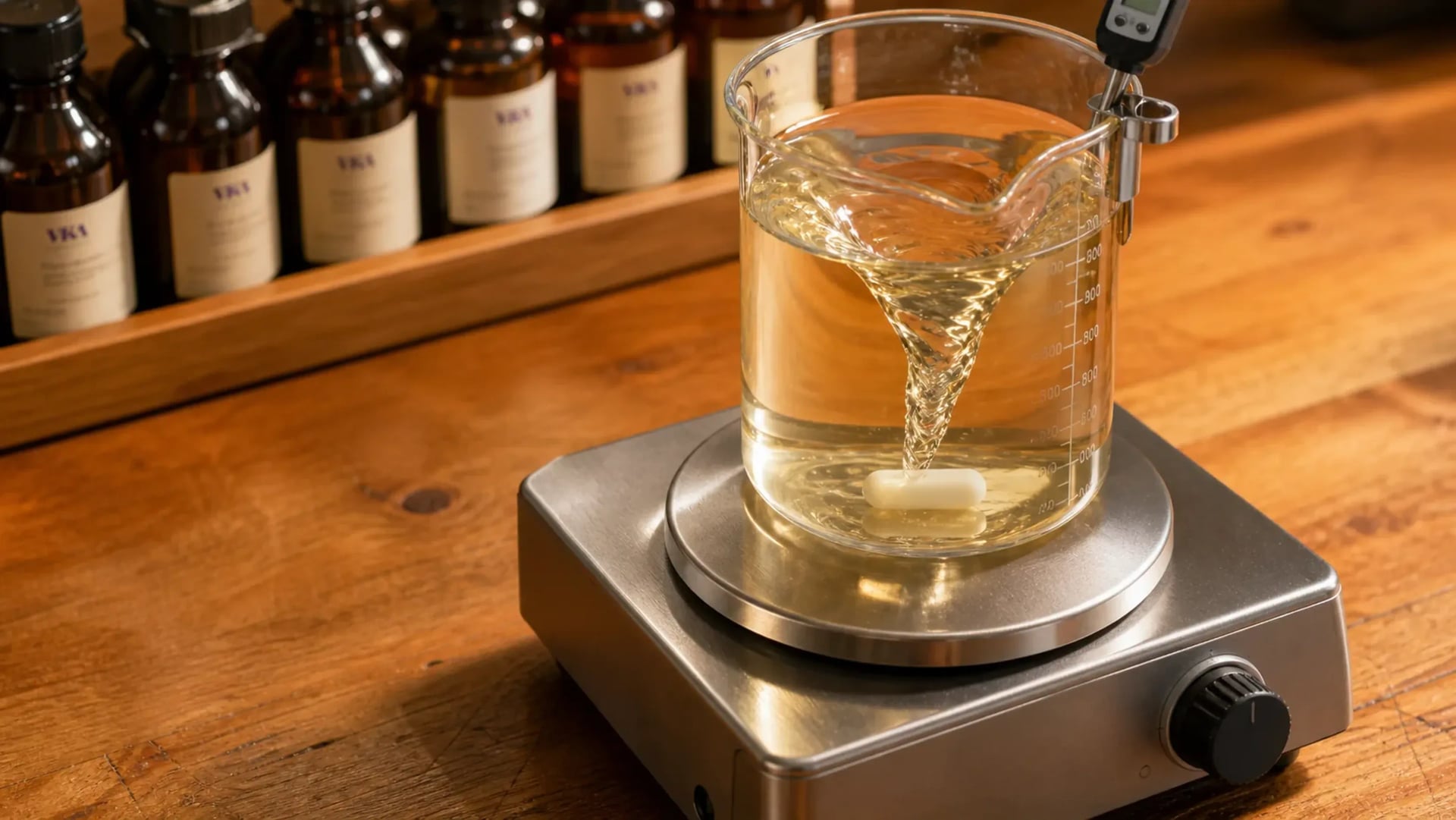
At VKA, masking is a core part of how we develop flavours for difficult bases. We combine taste modulation and bitter-blocking with aromatic masking and sweetness balancing, and where the off-note is best handled physically we use EssenceLock, our encapsulation technology, to keep bitter or metallic ingredients away from the palate until after they are swallowed. For powder products the same work pairs with TasteGuard, our preservation system, so the masked profile holds through storage and transit rather than drifting before it reaches your line. This work runs across the categories where off-notes bite hardest, including nutraceuticals and supplements and the wider set of food and beverage solutions we develop for. If you have a base with an off-note you cannot remove, talk to a flavourist directly and bring a sample of the real thing.
Sources
- Meyerhof et al. - The molecular receptive ranges of human TAS2R bitter taste receptors, Chemical Senses 35(2):157-170 (2010)
- Ziaikin, David, Uspenskaya and Niv - BitterDB: 2024 update on bitter ligands and taste receptors, Nucleic Acids Research 53(D1):D1645-D1650 (2025)
- Hellfritsch et al. - Human psychometric and taste receptor responses to steviol glycosides, Journal of Agricultural and Food Chemistry 60(27):6782-6793 (2012)
- Slack et al. - Modulation of bitter taste perception by a small molecule hTAS2R antagonist, Current Biology 20(12):1104-1109 (2010)
- Ming, Ninomiya and Margolskee - Blocking taste receptor activation of gustducin inhibits gustatory responses to bitter compounds, PNAS 96(17):9903-9908 (1999)
- Harmon, Ahmed and Breslin - Amino acid bitterness: characterization and suppression, Journal of Agricultural and Food Chemistry (2024)
- Trevisani et al. - Ethanol elicits and potentiates nociceptor responses via the vanilloid receptor-1, Nature Neuroscience 5(6):546-551 (2002)
- Ma et al. - Interaction of polyphenols with salivary mucin and proline-rich protein toward the astringency mechanism, Food Chemistry 502:147605 (2026)
- Epke, McClure and Lawless - Effects of nasal occlusion and oral contact on perception of metallic taste from metal salts, Food Quality and Preference 20(2):133-137 (2009)
- Sodium chloride replacement by potassium chloride in bread: determination of sensorial potassium threshold, International Journal of Gastronomy and Food Science (2022)
- Screening and mechanistic evaluation of antioxidants for mitigating beany flavor formation during pea protein extraction, Current Research in Food Science (2026)
- Alcalase hydrolysis modulates the techno-functional properties of dry-fractionated pea protein, reducing off-notes, Current Research in Food Science (2026)
- Stevia-derived sweeteners in reduced-sugar foods: formulation strategies and sensory optimization, Frontiers in Nutrition (2026)
- Australia New Zealand Food Standards Code - Schedule 14 - Technological purposes performed by substances used as food additives (F2023C00755)
- Australia New Zealand Food Standards Code - Standard 1.2.4 - Statement of ingredients, ss 1.2.4-3(2) and 1.2.4-7 (F2025C00914)
- Australia New Zealand Food Standards Code - Standard 1.2.3 - Warning statements, advisory statements and declarations, s 1.2.3-4(5) (F2024C01143)
- Codex Alimentarius - Guidelines for the Use of Flavourings CAC/GL 66-2008, cll 2.2, 3.3 and 3.4
- A homoeriodictyol sodium mouthwash reduces bitterness sensitivity, Scientific Reports, doi 10.1038/s41598-026-53510-7 (2026)
- Taste modulation by umami compounds and bitterness suppression, Sensors 26(16):5073, doi 10.3390/s26165073 (2026)
- Commission Regulation (EU) 2026/175 of 26 January 2026, recital (5) and Annex (FL No 16.137)
- JECFA 102nd meeting, Summary and Conclusions, neohesperidin dihydrochalcone entry (meeting 9 to 18 June 2026)